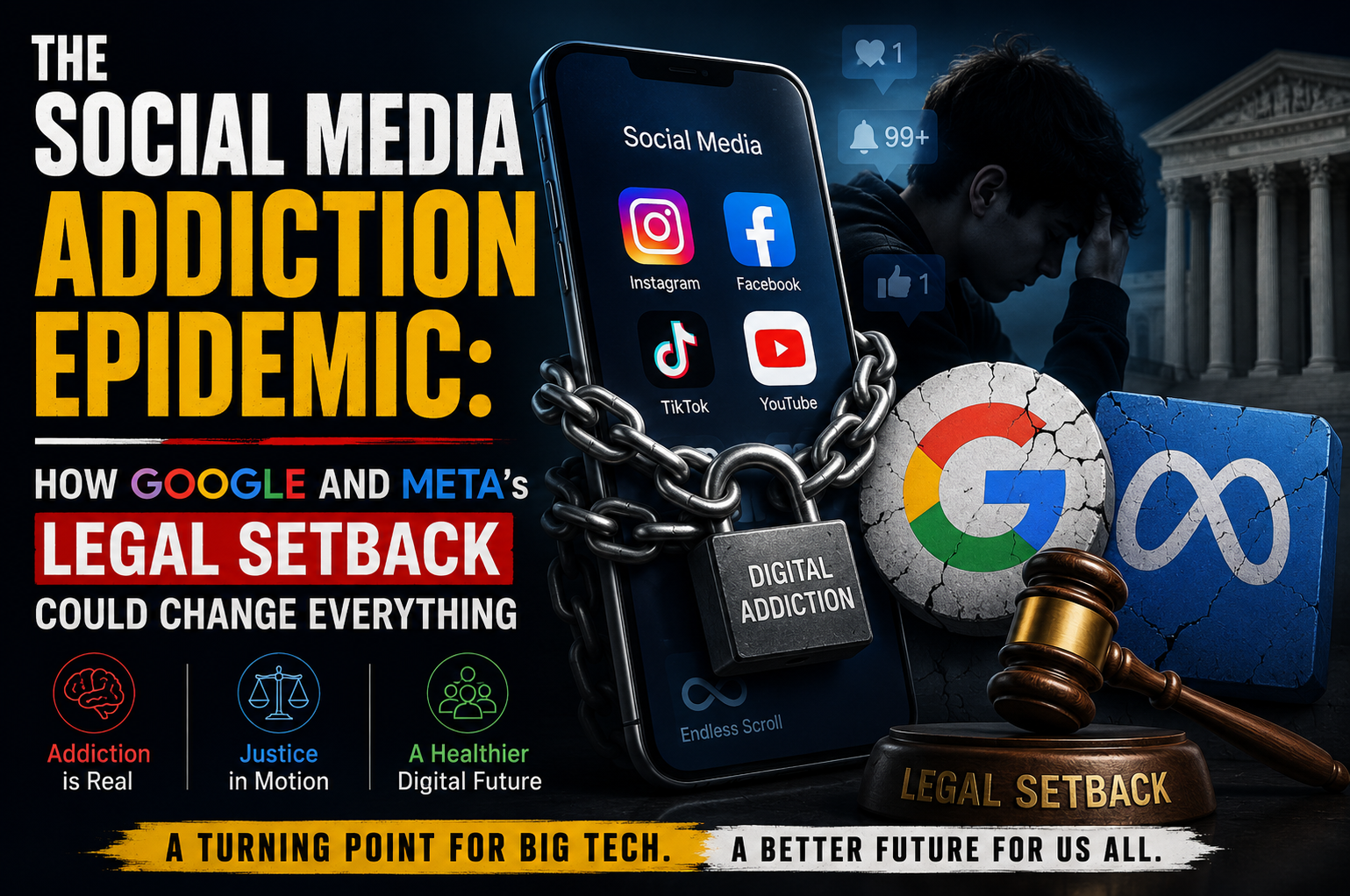
The Social Media Addiction Epidemic: How Google and Meta’s Legal Setback Could Change Everything
The Growing Concern of Social Media Addiction
Social media has become an integral part of our daily lives, but a growing concern is the impact it has on our mental health, particularly among young people. Social media addiction is a term used to describe the excessive use of social media, leading to negative effects on our well-being.
Recent studies have shown that excessive social media use can lead to increased symptoms of depression, anxiety, and loneliness. Moreover, it can also affect our self-esteem and body image.
The Legal Setback for Google and Meta
A recent lawsuit against Google and Meta has brought attention to the issue of social media addiction. The lawsuit alleges that the companies’ algorithms are designed to be addictive, keeping users engaged for longer periods.
The lawsuit also claims that the companies have failed to provide adequate warnings about the potential risks of social media addiction. This has led to a legal setback for the companies, with the court ruling in favor of the plaintiffs.
Implications of the Lawsuit
The implications of this lawsuit are far-reaching. If the companies are found to be liable for social media addiction, it could lead to significant changes in the way they design their algorithms and interact with users.
Some potential changes could include:
- Implementing time limits on social media use
- Providing warnings about the potential risks of social media addiction
- Offering tools to help users track and manage their social media use
The Future of Social Media Regulation
The lawsuit against Google and Meta is just the beginning of a larger conversation about social media regulation. As social media continues to play a larger role in our lives, it’s essential to consider the potential risks and consequences.
Regulators and lawmakers are starting to take notice, with some calling for stricter regulations on social media companies. This could include age restrictions, content moderation, and transparency around algorithmic decision-making.
Written by Ankit Chauhan
Technology enthusiast focused on AI, automation and digital trends.