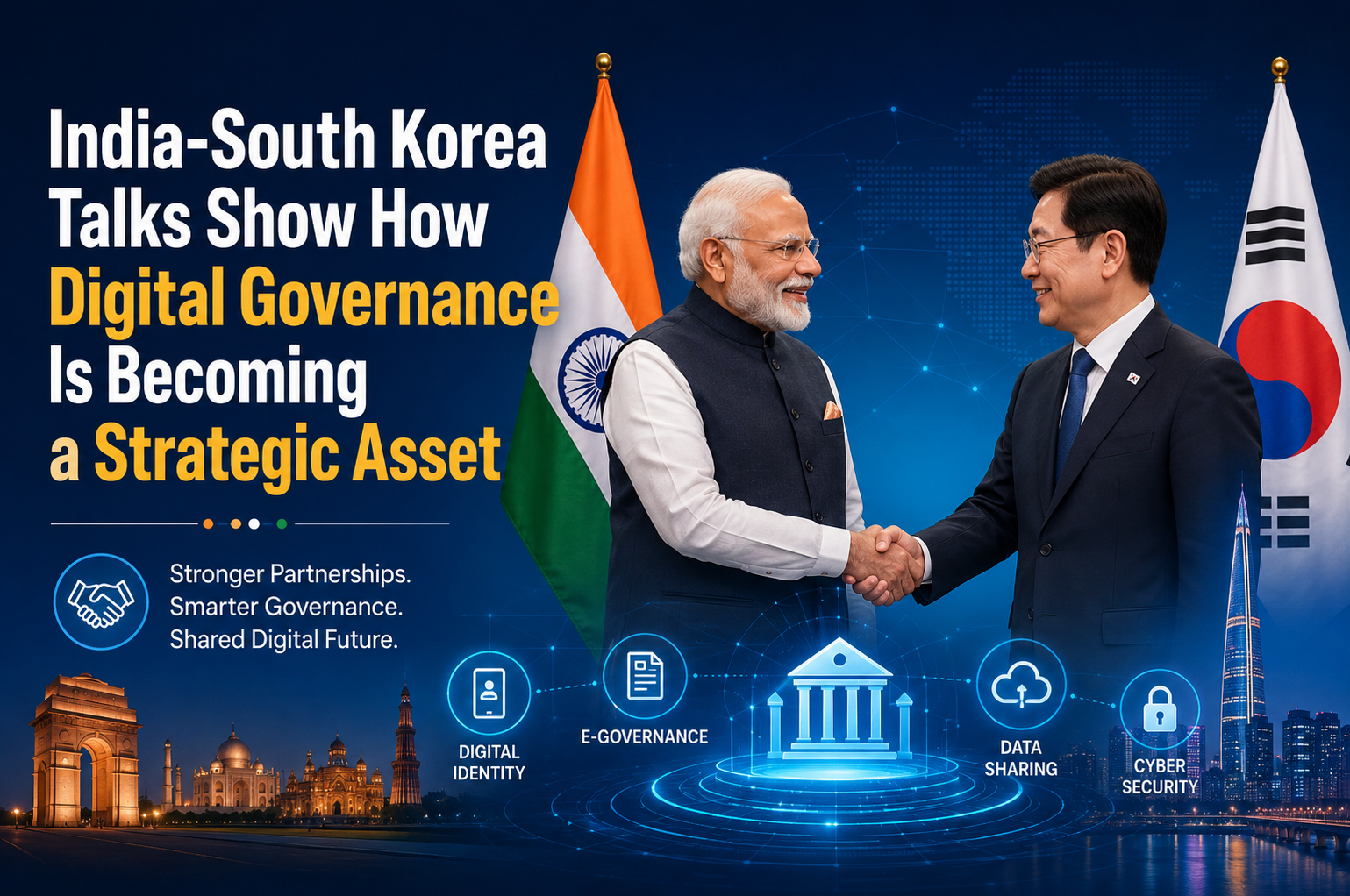
From AI to Public Services: India-South Korea Talks Show How Digital Governance Is Becoming a Strategic Asset
India and South Korea have been making waves in the digital landscape, and their recent talks on leveraging AI in public services have sparked a significant interest in the tech community. The integration of AI in governance is not only a step towards modernization but also a testament to the strategic importance of digital assets in today's world.
The collaboration between the two nations aims to enhance public services, making them more efficient, accessible, and citizen-centric. By harnessing the power of AI, they plan to streamline processes, reduce bureaucracy, and improve the overall quality of services.
The Growing Importance of Digital Governance
Digital governance has become a critical aspect of a nation's development, and India and South Korea are at the forefront of this revolution. By embracing AI and other digital technologies, they are creating a more responsive, transparent, and accountable system of governance.
This shift towards digital governance is not only beneficial for the citizens but also has a significant impact on the economy. It can attract investments, create new job opportunities, and stimulate growth in various sectors.
Key Areas of Focus
The India-South Korea talks have identified several key areas where AI can be leveraged to transform public services. These include:
- Healthcare: AI-powered diagnostic tools, personalized medicine, and predictive analytics can improve healthcare outcomes and reduce costs.
- Education: AI-driven adaptive learning systems, intelligent tutoring systems, and automated grading can enhance the quality of education and make it more accessible.
- Transportation: AI-powered traffic management systems, smart traffic signals, and autonomous vehicles can reduce congestion, improve safety, and decrease travel times.
Challenges and Opportunities
While the integration of AI in public services offers numerous benefits, it also poses several challenges. These include:
Data privacy and security concerns, lack of infrastructure, and the need for skilled personnel are some of the hurdles that need to be addressed.
However, the opportunities far outweigh the challenges. The use of AI in public services can lead to:
- Improved Efficiency: Automation of routine tasks, reduction in paperwork, and enhanced process optimization.
- Enhanced Citizen Experience: Personalized services, streamlined processes, and increased transparency.
- Increased Accountability: Data-driven decision-making, real-time monitoring, and improved accountability.
Conclusion
The India-South Korea talks on leveraging AI in public services mark a significant milestone in the digital governance journey. As the world becomes increasingly digital, it is essential to harness the power of AI and other digital technologies to create a more efficient, responsive, and citizen-centric system of governance.
By addressing the challenges and capitalizing on the opportunities, India and South Korea can create a model for digital governance that can be replicated globally, making a significant impact on the lives of citizens and the economy as a whole.
Written by Ankit Chauhan
Technology enthusiast focused on AI, automation and digital trends.