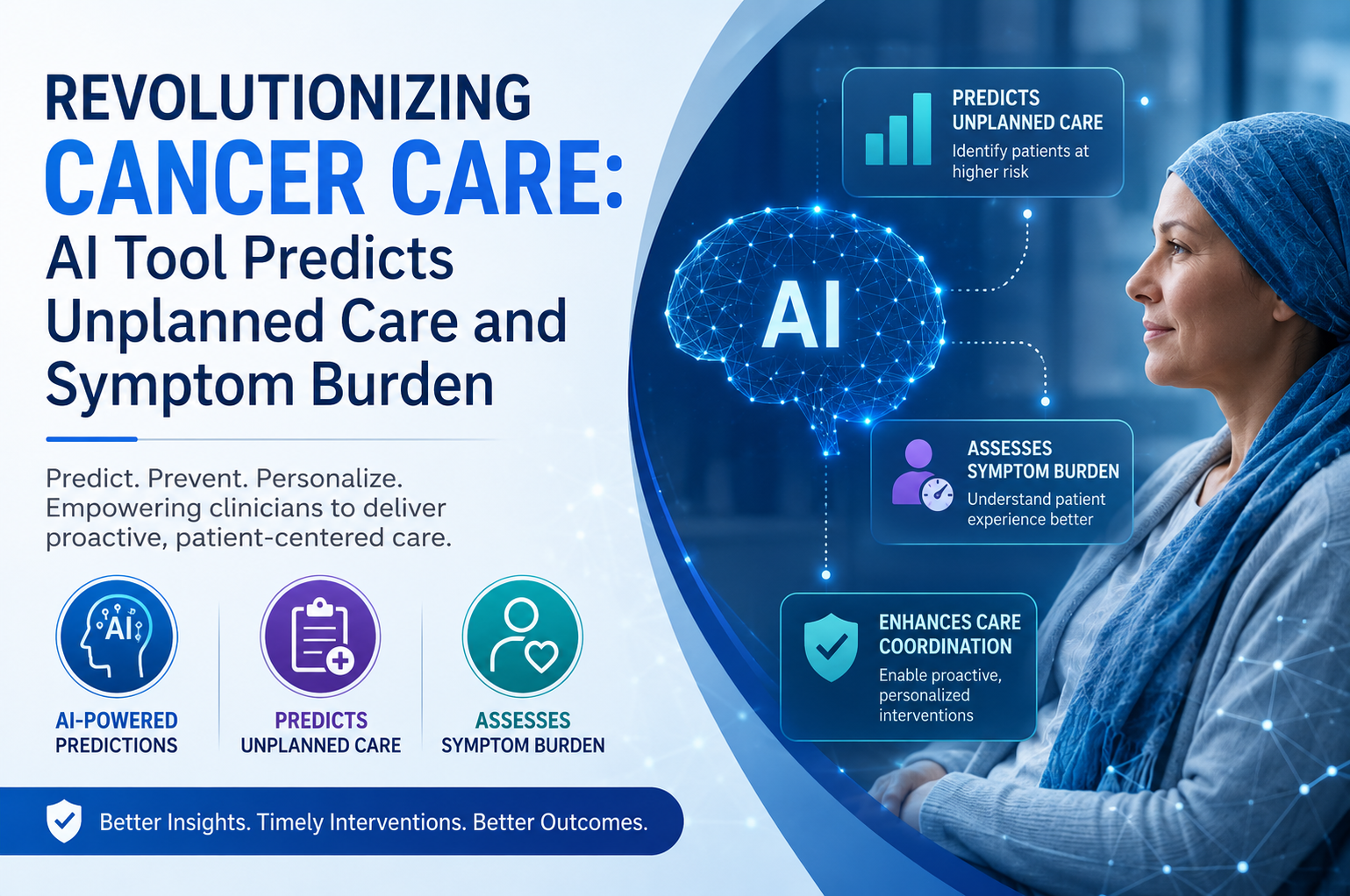
Revolutionizing Cancer Care: AI Tool Predicts Unplanned Care and Symptom Burden
Cancer care is on the cusp of a revolution, thanks to the power of artificial intelligence. A new AI tool has been developed to predict unplanned care and symptom burden in cancer survivors, a game-changer for improving treatment outcomes and quality of life.
This innovative technology uses machine learning algorithms to analyze patient data, identifying patterns and trends that can inform personalized care plans. By predicting unplanned care and symptom burden, healthcare providers can intervene early, reducing the risk of complications and improving patient outcomes.
How AI is Transforming Cancer Care
The use of AI in cancer care is not new, but this latest development takes it to the next level. By leveraging predictive analytics, healthcare providers can gain valuable insights into patient behavior, allowing for more targeted and effective treatment strategies.
The implications are significant, with the potential to reduce hospital readmissions, improve patient satisfaction, and enhance overall cancer survivorship. As the technology continues to evolve, we can expect to see even more innovative applications of AI in cancer care.
The Future of Cancer Care: AI-Driven Personalization
So, what does the future hold for cancer care? One thing is certain: AI will play an increasingly important role in shaping treatment strategies and improving patient outcomes. With the ability to analyze vast amounts of data, AI can help healthcare providers develop personalized care plans tailored to each patient’s unique needs.
This is just the beginning of an exciting new era in cancer care. As AI continues to advance, we can expect to see even more innovative applications of this technology, from early detection to targeted therapies.
- Predictive analytics for unplanned care and symptom burden
- Personalized care plans using machine learning algorithms
- Improved patient outcomes and reduced hospital readmissions
Conclusion: The Power of AI in Cancer Care
In conclusion, the use of AI in cancer care is a game-changer. With the ability to predict unplanned care and symptom burden, healthcare providers can intervene early, improving treatment outcomes and quality of life for cancer survivors.
As we look to the future, it’s clear that AI will play an increasingly important role in shaping cancer care. With its potential to transform treatment strategies and improve patient outcomes, this technology is an exciting development in the fight against cancer.
Written by Ankit Chauhan
Technology enthusiast focused on AI, automation and digital trends.